aula Badosa's forehand isn't just powerful—it's a case study in modern baseline aggression. Watch her dismantle opponents on clay or hard courts, and you'll notice a recurring pattern: she takes the ball early, drives through it with heavy topspin。and uses her long levers to dictate rallies. I've spent hours analyzing her matches, and the mechanics are replicable if you break them down.Start with the grip. Badosa uses a semi-western forehand grip, which is standard on the WTA tour. But her hand placement is slightly more extreme—the base knuckle of her index finger sits closer to the bevel's edge. This allows her to whip up the back of the ball for that trademark heavy spin. Try it on the practice court: shift your grip a millimeter or two and feel how it changes your racquet head speed. Next, focus on the unit turn. Badosa's shoulders rotate fully。and her left arm stretches across her body during the takeback. That coiling action stores energy, and when she uncoils, the kinetic chain flows from legs to hips to shoulders. Her elbow stays bent and close to her body, which generates rotation rather than a pushing motion. I see too many club players straighten the arm early—that kills the whip.The contact point is where Badosa separates herself. She meets the ball well in front of her front foot, often at waist height or slightly higher. Her wrist stays firm but relaxed—no floppy snapping. The follow-through is compact: racquet finishes over the left shoulder。but not with a huge loop. That compactness gives her recovery time, which is why she can hit three aggressive forehands in a row without getting out of position. A key detail: her eyes lock on the contact zone a split second longer than most. That visual discipline translates to cleaner ball striking. You can train this with a simple drill—have a partner feed balls and consciously watch the racquet meet the ball, not the net or the target.Footwork ties it all together. Badosa uses a split-step before every opponent's shot。
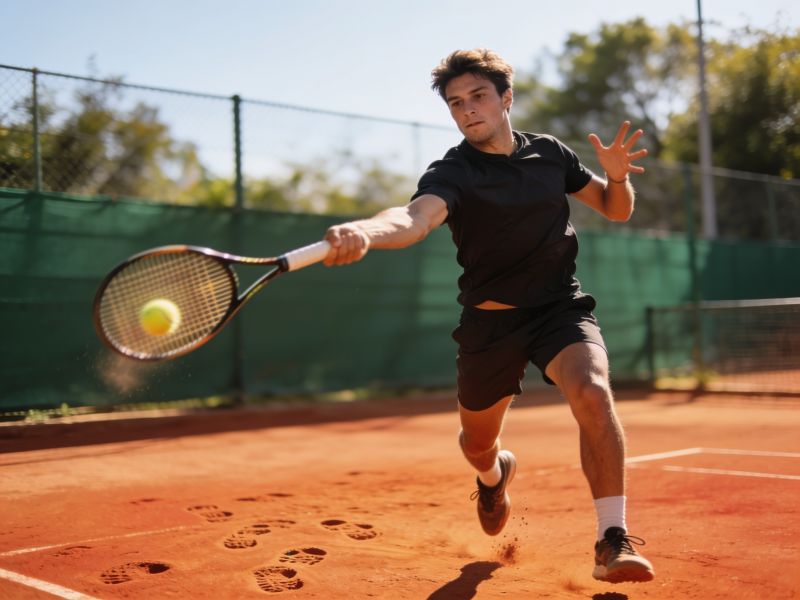
and her first move is often a small adjustment step rather than a full sprint. She stays low, loading her legs, and pushes off explosively. On wide balls, she uses a crossover step to cover ground, then a shuffle to fine-tune. I've noticed she rarely takes big lunging strides—she prefers quick, choppy steps to maintain balance. That's a habit worth stealing. Also, her recovery footwork after the shot is immediate: two quick backsteps to the middle, racquet up and ready. No admiring the shot.To apply Badosa's forehand into your game, prioritize three things: the semi-western grip adjustment, the full unit turn with a bent elbow, and the early contact point. Practice shadow swings first, then move to live ball feeds. Don't try to hit winners immediately—focus on the feeling of the ball compressing on the stringbed. Badosa's forehand is a weapon built on repetition and discipline, not raw power alone. Give it a few weeks of deliberate practice。
and you'll notice more depth, more spin, and fewer unforced errors.