
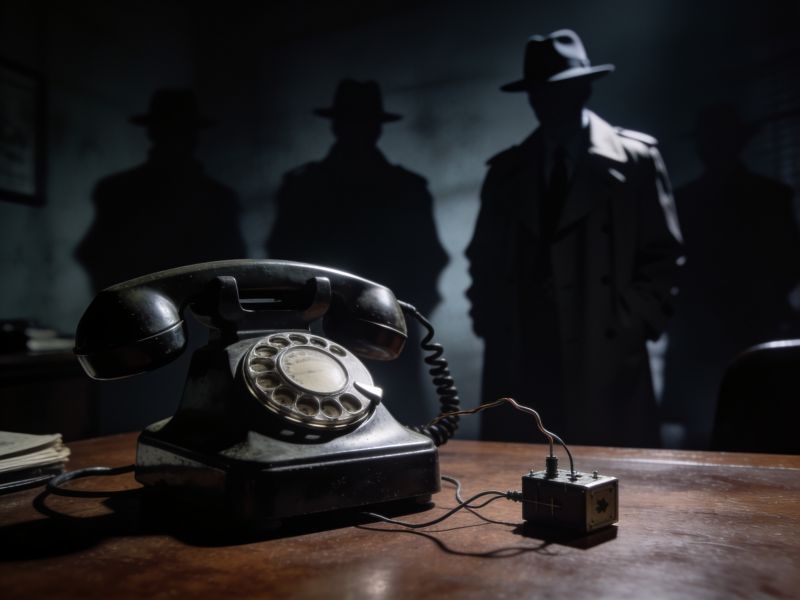
he crackle on the line wasn't static. In the summer of 1973。a routine check by technicians at the Democratic National Committee unearthed a more sinister explanation: wiretaps. This discovery ignited what would become known as Telephone Gate—a scandal that exposed the vulnerability of political communication and the abuse of surveillance power. Telephone Gate was not a single incident but a series of illegal eavesdropping operations linked to the Nixon administration, targeting political opponents, journalists, and even government officials. The initial break-in at the Watergate complex, which led to the wider investigation, was itself connected to telephone surveillance. The term Telephone Gate encapsulates the broader pattern of wiretapping that characterized the era's political espionage.Understanding Telephone Gate requires examining the legal and ethical boundaries of surveillance. The Fourth Amendment protects against unreasonable searches and seizures, yet the Nixon administration authorized warrantless wiretaps under the guise of national security. The Senate Select Committee on Presidential Campaign Activities, known as the Ervin Committee, revealed that over 100 warrantless wiretaps were conducted between 1969 and 1971. These operations targeted individuals like Morton Halperin, a National Security Council staffer, whose phone was tapped for 21 months without evidence of wrongdoing. The Telephone Gate scandal underscored how easily national security claims could be manipulated to silence dissent. In my view。the lasting lesson is that unchecked surveillance erodes public trust and undermines democratic processes.Native American activists also found themselves under Telephone Gate's shadow. During the 1973 Wounded Knee incident, FBI surveillance included telephone intercepts of leaders like Russell Means。
often without proper legal authorization. Such actions extended the pattern of domestic spying beyond political campaigns to social movements. The Church Committee later documented these abuses, leading to reforms like the Foreign Intelligence Surveillance Act (FISA) in 1978. Telephone Gate, though less known than Watergate, thus directly influenced modern surveillance oversight. I find it striking that the same technology that connects us can become a tool for repression when deployed without accountability.Telephone Gate's echoes persist today. The 2013 Edward Snowden revelations about NSA bulk data collection revived debates about wiretapping and privacy. Modern technologies—from cell phone location tracking to metadata analysis—make surveillance even more pervasive. The scandal serves as a cautionary tale: without strict oversight, telephone surveillance can morph into political weaponry. Telephone Gate taught us that transparency and legal safeguards are non-negotiable. As citizens, we must remain vigilant against the quiet expansion of eavesdropping powers. The consequences of ignoring this history are too grave to contemplate.